
Young Minds Are Easy to Shape

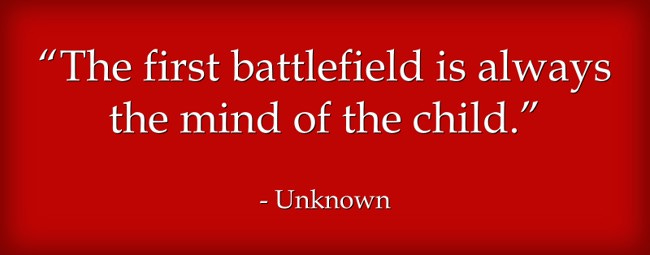
We see the protests all over the news and social media. Every issue is presented as an emergency, every disagreement becomes a crisis, and every social movement demands loyalty. An emotionally charged agenda is deeply embedded in every child's mind.
Most people think manipulation begins with politics, media, or governments. Nope, it begins much earlier than that. It begins in the home, during childhood, when the mind is still forming and trying to understand the world.
Young minds are incredibly impressionable. Children arrive here dependent, vulnerable, trusting, and deeply wired for attachment. They absorb beliefs, emotional patterns, fears, identities, and moral frameworks long before they develop the ability to examine them critically. Whoever gains emotional influence over a child early gains influence over the adult later.
That is why so many systems, movements, cults, gangs, ideologies, activist groups, political organizations, and even corporations focus so heavily on youth. Get them while they are young, shape identity early, and attach emotion to the message before reason fully develops.
Once attachment forms, fear is often used to maintain it. Threats, punishment, shame, humiliation, exclusion, fear of abandonment, fear of being an outsider, fear of questioning the tribe, and the fear of being disliked.
This pattern is found everywhere, from abusive households, gangs, and cults to authoritarian regimes and extremist groups. It is an age-old mechanism that encourages dependency, suppresses individuality, links fear with disobedience, and emotionally influences loyalty. Children raised in emotionally disconnected homes are susceptible to these effects.
When parents are exhausted, absent, distracted, overwhelmed, emotionally unavailable, or consumed by survival, children naturally begin searching elsewhere for belonging, identity, guidance, and emotional safety. Human beings are attachment-driven creatures. A child who does not feel deeply connected at home will attach to peers, institutions, ideologies, online communities, influencers, or tribes that offer certainty and acceptance.
Modern society creates the perfect conditions for this to happen.
Fathers leave the home drained by repetitive work that often feels disconnected from meaning and purpose. Mothers are stretched thin trying to balance survival, work, stress, and endless responsibilities. Inflation rises, economic pressure grows, and families become separated under constant stress and exhaustion.
Meanwhile, children spend more waking hours with screens, algorithms, peer groups, institutions, and social media than they do with grounded adults who truly know them. A teenage boy sits alone in his room scrolling for hours, searching for identity, direction, and meaning. A lonely girl learns to measure her worth through approval, likes, and social validation. Children increasingly absorb their worldview from strangers on screens rather than from deeply connected adults who love them. Their values, fears, identity, and worldview are increasingly shaped by systems designed to capture attention, emotion, and loyalty.
Then society wonders why tribalism, confusion, emotional fragility, ideological extremism, and identity crises spread so rapidly. A disconnected child is psychologically exposed.
If children cannot find belonging, stability, and meaning through healthy connection at home, they will often seek it somewhere else. Sometimes that becomes gangs, sometimes extremist politics, and sometimes cults, hyper-nationalism, online radicalization, ideological activism, consumer culture, or nihilistic communities built around outrage and resentment. Whatever gives the child identity and emotional certainty becomes powerful.
That is why emotionally wounded populations are easier to manipulate. They use fear to bypass careful reasoning, shame creates hunger for approval, and large systems understand this very well.
Governments, corporations, activist movements, media institutions, political tribes, and ideological organizations all compete for emotional capture. They do not simply want agreement. They want identity-level attachment. They want people emotionally fused to narratives, outrage, fear, and tribe because emotionally reactive populations are easier to direct.
Entire industries now profit from emotional instability. Fear keeps people engaged, reactive, tribal, and easy to influence. So the population is kept in a constant state of psychological tension. Be angry at neighbors, suspicious of strangers, terrified of collapse, fear of civil war, and emotionally consumed by political enemies.
The formula is simple and incredibly effective. Keep people divided, emotionally charged, and searching for someone to blame. Race against race. Men against women. Left against right. Nationalism against globalism. Religion against secularism. Every disagreement becomes an emotionally charged moral war. Every issue becomes “us versus them.”
A frightened and emotionally dysregulated population becomes easier to control because people searching for safety surrender independent thought in exchange for belonging. The deeper issue underneath all of this is not simply politics. It is emotional disconnection.
A civilization can survive disagreement, but it cannot survive widespread emotional fragmentation and identity confusion. Because once people lose their connection to themselves, their families, and grounded sources of meaning, they become incredibly vulnerable to anyone willing to tell them who they are, whom to fear, and whom to blame.
That is why strong families matter so much. Not the authoritarian homes built on fear and obedience you all probably grew up in. Not the ones with domination, intimidation, and punishments handed out every day. The homes with presence, connection, emotional safety, truth, consistency, guidance without violence, and leadership without humiliation.
A deeply connected child becomes far harder to manipulate because they no longer need a tribe, ideology, or movement to tell them they have worth. He does not need outrage to feel alive, he does not need a gang to feel significant, and he does not need fear to create identity.
A child raised with connection learns how to think instead of merely what to think, and that kind of human being is very difficult to control.