
You Can’t Teach Regulation Through Dysregulation
Merry Christmas!!!

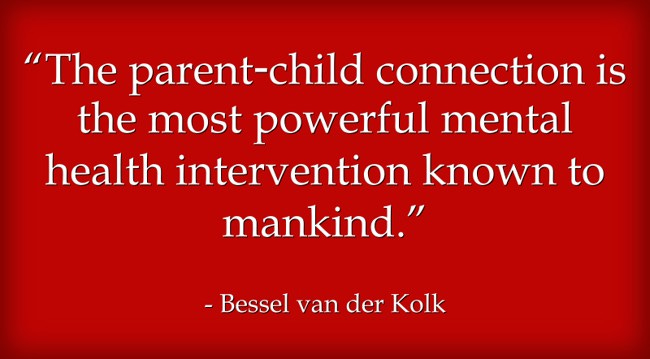
Parents say they want emotionally regulated children.
Calm, resilient, and grounded children, able to face frustration without collapsing.
Then the child gets overwhelmed, has a meltdown, and the parent loses control.
A father hits or spanks a toddler for crying or screaming.
A mother yells or punishes a child for being emotionally upset.
Somehow, we expect the child to learn regulation from that.
That expectation is the lie at the center of modern parenting.
Children do not learn emotional regulation through instruction.
They learn it through absorption from their parents’ examples.
The nervous system develops in relationship. Long before a child can regulate themselves, they borrow the regulation of the adult responsible for them.
A dysregulated adult cannot raise a regulated child.
Emotional Systems Are Wired In, Not Optional
Children are not born emotionally blank.
They arrive with a full range of feelings and emotions hardwired into them.
Care. Fear. Anger. Grief. Joy. Curiosity. Play.
These emotions are not flaws, errors, or some extra baggage.
They are not bad habits, and they are not things to be trained out of a child.
They exist for survival. Children need the freedom to express emotions to learn how to navigate through society.
A baby cries because that cry pulls a parent close.
A child protests because connection matters.
Fear keeps them safe, anger signals boundaries, grief marks loss, and joy fuels growth.
So when a child feels deeply, loudly, or inconveniently, something is not going wrong. Something very normal and very human is happening.
The problem isn’t the child’s emotions.
The problem is adults who were never allowed to have their own.
The First Need Is Not Correction, It’s Being Seen
One of the deepest needs of a child is to be seen, heard, and understood.
When a child feels understood, frightening emotions resolve.
When they feel heard, pain moves through instead of getting trapped in the body.
The child learns something foundational: I can go through difficulty and still be okay.
But many parents skip straight to correction. They rush into punishment, lectures, consequences, or “skill‑building” without ever truly understanding the child’s inner experience.
When that happens, the child feels alone, and skills do not grow in isolation.
“When parents offer their children empathy and help them to cope with negative feelings like anger, sadness, and fear, parents build bridges of loyalty and affection.”
— John Gottman
You don’t support a nervous system by ignoring it; you support it with connection.
Hearing a child does not create sensitivity. It validates what is already there.
“I’m listening.” “I see you.” “I’ve got you.” “It’s going to be okay.”
That is not indulgence. That is regulation in action.
Suppression Is Not Regulation
Children do not know how to regulate their nervous systems.
That ability develops slowly, and only with help.
It takes a calmer, more mature nervous system to regulate an overwhelmed one.
That means the parent. When an adult cannot stay present, grounded, and connected, the child has no template to learn from. So instead of learning regulation, the child learns suppression.
They learn:
Certain emotions are unacceptable
Love disappears when I struggle
I must hide parts of myself to belong
Parents often call this “discipline,” but suppression is not discipline. It is fear training.
Fear does not build strength. It creates anxiety, numbness, compliance, or rage.
Violence Is Often Self‑Inflicted Pain
When parents never learn to regulate themselves, they pass that dysfunction forward.
Not intentionally, but they do not know what they do. They are ignorant of the long-term effects, as evidenced by how children have been mistreated for generations.
They hit, punish, spank, threaten, manipulate, and use force as a way to handle the child’s outbursts or resistance. It is the pain that has been carried silently for years, sometimes decades, suppressed because it was never safe to express. It’s the release of unresolved anger, fear, and helplessness onto a smaller body that cannot resist.
The child becomes the outlet, the mirror, and the release valve. The small, vulnerable body of the child absorbs the force that the parent cannot contain within themselves. The parent often does not consciously recognize this and is unaware that the pain they are discharging is their own, not the child’s.
Violence is often not born from cruelty but from a human being in pain, acting without the tools or awareness to contain it safely.
This does not make the parent evil, but it does make the cycle real.
The Only Failure That Lasts Is Despair
Children do not fail because they have emotions.
Their inner chaos is not a mistake; it’s proof of life, proof of growth, and proof of a nervous system learning to navigate the world.
Parents fail when they give up on their own growth.
When they refuse to face their own unresolved pain, fear, and anger, they teach the child that struggle is permanent.
Despair is what gets passed down, the belief that nothing can change, that this is “just how it is.” But despair is not truth; it is a story we tell ourselves when support, guidance, and connection are absent.
Inside every human being, like every living organism, is a drive to heal.
A wounded tree heals. A wounded animal heals. A wounded human heals.
Healing does not fail because of some inner defect.
It fails due to a lack of support. It fails when parents refuse to heal themselves.
When their actions do not align with virtue, when they harm those who depend on them, and when they feel that things can never change.
Children inherit the emotional landscape of their parents.
There is no shortcut or excuse; there is only responsibility.
Peaceful Parenting Is Regulated Leadership
Peaceful parenting is not permissive. It is regulated leadership.
It is the adult doing the hardest work first:
Staying present instead of reactive
Remaining calm instead of dominant
Choosing connection over control
When a parent can remain grounded in the presence of a child’s emotional outbursts, the child learns something life‑altering: I can go through hard things and be loved.
That belief becomes the foundation of resilience.
Children do not learn calm from being controlled, beaten, or harmed.
They learn calm by experiencing it, and being held inside it.
If we want emotionally resilient children, we must become emotionally regulated parents.
You do not raise regulated children by overpowering them.
You raise them by refusing to pass on despair.
By choosing to become the calm, stability, and safety in your child’s life.
When you stop physically beating, threatening, and punishing your children, Christmas and every holiday become better and more peaceful.