
When Consequences Become Control

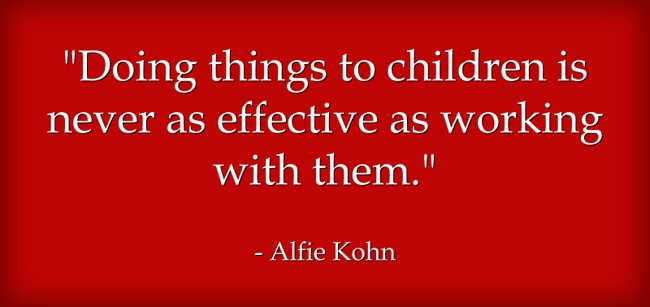
The greatest irony of parenting may be that we spend our adult lives fighting for freedom while raising our children to surrender theirs.
Think about your own life. You don’t want your boss threatening you every time you make a mistake. You don’t want your spouse taking away your phone because you forgot to do something. You don’t want the government fining you every time you make a decision they don’t approve of. You don’t want someone with more power than you constantly reminding you that if you don’t comply, there will be consequences.
When another adult tries to control you, something inside you resists. You call it manipulative, authoritarian, or controlling. You say, “I’m an adult, you don’t get to run my life.” Most of us recognize that instinct as healthy. Healthy adults set boundaries. They decide what they will and won’t tolerate. They learn to govern themselves instead of allowing someone else to govern them.
Then we become parents, and suddenly many of the same behaviors we reject when directed at us become acceptable when directed at our children. “If you don’t do what I say, there will be consequences.” It sounds so ordinary that we rarely stop to examine what it actually means.
Most people believe consequences teach responsibility. I think that deserves a closer look, because there’s an important distinction between consequences, boundaries, and control, and I think we confuse them all the time.
Reality has consequences. If I don’t study, I might fail the test. If I spend all my money, I won’t have money tomorrow. If I’m dishonest with people, eventually they stop trusting me. Nobody invented those consequences. They emerge naturally from reality itself.
A boundary is something different. A boundary doesn’t tell another person what they must do. It tells them what I will do. “I won’t stay in a conversation where I’m being insulted.” “I’m happy to help, but I’m not willing to be yelled at.” A boundary governs my behavior, not yours.
Control works in the opposite direction. Control says, I don’t like your behavior, so I’m going to create an unpleasant experience until you behave the way I want. Control says there will be no dessert, no screen time, and no privileges until you comply.
That difference matters more than I think most people realize.
Parents often say they want to raise children who have strong boundaries. We want daughters who can recognize controlling relationships and say no. We want sons who won’t give in to peer pressure. We want our children to recognize manipulation, resist coercion, and confidently say, “You don’t get to treat me that way.”
Those are admirable goals, but where exactly are they supposed to learn those skills? Because if boundaries are healthy, children need opportunities to practice them, and the safest place to practice them should be the place where they are loved the most.
Imagine a teenager saying something like this.
“Dad, I understand that this is my responsibility, and I intend to take care of it. But I don’t like the way you’re talking to me. It feels controlling. I need some ownership over my own responsibilities. Please don’t manipulate me into doing something I’m already responsible for.”
How many parents would hear maturity in those words?
How many would hear disrespect?
We say we want children who can stand up to manipulation, unless they’re standing up to ours. We say we want independent thinkers, as long as their thinking never challenges our authority.
A boundary that only exists against strangers isn’t really a boundary. It has to exist wherever power exists. Otherwise, what we’re really teaching isn’t boundaries at all; it’s submission.
This doesn’t mean children should never cooperate or contribute to the family. Families require shared responsibilities, living with other people always involves mutual consideration, and parents have needs too. The question is not whether children should be responsible. It’s who owns that responsibility.
There’s a meaningful difference between saying, “I trust you to manage your responsibilities, and I’ll let reality teach what happens if you don’t,” and saying, “I’m going to impose consequences until you comply with me.” One teaches ownership. The other teaches obedience.
This distinction explains why so many adults struggle to set boundaries later in life. Many of us grew up believing that saying, “Please don’t treat me that way,” was disrespectful; this is the classic “Nice Guy.” We think questioning authority invited punishment. We believe protecting ourselves was interpreted as defiance. We learned that the people with more power got to define reality, while our role was to comply.
Then we become adults and wonder why it’s so difficult to tell a controlling boss no, why we tolerate manipulative partners, why guilt works on us so easily, why we struggle to speak honestly when someone has authority over us, why we treat other people’s feelings as more important than our own, and why saying what we actually want can feel more dangerous than saying nothing at all.
The goal of parenting shouldn’t be to raise children who become better at complying with controlling people. It should be to raise children who become capable of governing themselves. And people don’t learn self-government by repeatedly being controlled by someone else. They learn it by being trusted with ownership, by experiencing the natural consequences of reality, and by discovering that even in relationships where someone has more experience, more wisdom, and more responsibility, they are still allowed to choose their path, even if it leads to failure or pain.
The greatest test of a parenting philosophy isn’t whether it produces obedient children. It’s whether the principles are so consistent that you would gladly accept them if the roles were reversed.
Picture yourself learning a skill you’ve never touched before, or finding your footing in a completely unfamiliar city. What would actually help you? Not threats, not manufactured consequences, not someone waiting to punish you for not knowing it already, and not someone standing over you waiting for you to fail so they can prove a point.
You’d want kindness, compassion when you got something wrong, guidance from someone who remembered what it felt like to be new at this, and real support from someone in your corner while you figured it out.
That’s not lowering the bar or being soft. That’s raising the standard for how we develop discipline and resilience in our children.
If a principle only feels fair when you’re the one holding the power, it probably isn’t a principle. It’s probably control.