
The Parenting Question Almost Nobody Asks

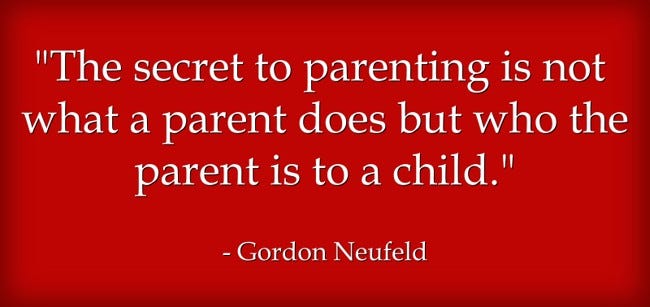
Most parenting advice focuses on the wrong things.
We spend years talking about behavior, obedience, consequences, grades, manners, and respect. Parents want to know how to get children to listen, cooperate, and make better choices. Entire parenting philosophies are built around a single idea: how do I get my child to do what I want?
But what if we asked a different question? What kind of relationship do you want with your child when they are thirty? That question changes everything.
Imagine your child as an adult. They have their own life, their own family, their own responsibilities. They no longer need your money, your approval, your advice, or your permission. They are completely free to spend time with whoever they choose.
Will they choose you?
Not because they feel guilty, not because they feel obligated, and not because they are afraid of disappointing you. Will they genuinely enjoy being around you?
Will they call because they trust you? Will they share their struggles because they feel safe with you? Will they invite you into their lives because your presence brings peace rather than tension? Or will they mostly feel relief when they leave?
The quality of your relationship with your adult child is the real measure of parenting success. It’s not whether they obeyed you at ten, not whether they got straight A’s, not whether they sat quietly in restaurants, and definitely not whether they followed every rule. The real question is whether they trust you when they no longer have to.
That is where many parents lose sight of the bigger picture. We become so focused on managing behavior that we stop paying attention to the relationship underneath it. We focus on winning the moment while slowly losing something much more valuable.
Every interaction either builds trust or weakens it. When a child tells the truth, what happens next matters. When they make a mistake, what happens next matters. When they express an emotion, disagree with you, or come to you with a problem, what happens next matters.
Children are always learning something, but often not what we think we are teaching. Many parents believe they are teaching respect when they are teaching fear. They believe they are teaching responsibility when they are teaching avoidance. They believe they are teaching honesty while teaching children to hide.
Children are incredibly adaptive. If telling the truth gets them into trouble, they learn to conceal it. If mistakes lead to shame, they learn to be perfectionists. If vulnerability leads to criticism, they learn to perform. If disagreement creates conflict, they learn compliance. From the outside, these children look well-behaved, and everyone witnesses parenting success.
Inside, trust is quietly disappearing. Years later, many parents find themselves confused. “My kids never call.” “We aren’t very close.” “I don’t know what happened.”
What happened is usually not one big event. It is thousands of small interactions accumulated over decades. Trust is rarely destroyed all at once. It is eroded slowly. The irony is that many parents would never accept this dynamic in any other relationship.
Imagine a marriage in which one person uses fear, punishment, shame, threats, or control to get cooperation. We would immediately recognize the problem. Yet when children are involved, many people stop asking whether the relationship itself is healthy and focus only on whether the child is complying.
But children are people before they are children. Like all human beings, they move toward relationships where they feel safe, understood, respected, and accepted. They move away from relationships where they feel controlled, criticized, judged, or emotionally unsafe.
Adults do this every day, and children do too.
One of the biggest myths in parenting is the belief that connection undermines authority. In reality, connection creates influence. Think about the people whose advice you value most. You do not listen to them because they can punish you. You listen because you trust them. Parenting is no different.
The strongest influence you will ever have over your child will not come from fear. It will come from trust. Trust keeps communication open. Trust makes honesty possible. Trust is what allows a child to bring their struggles to you rather than hide them. Trust is what makes a relationship survive long after parental power disappears.
Control and authority always disappear. One day the rewards stop working. The consequences stop working. The lectures stop working. One day your child becomes an adult and gets to decide who has access to their life.
That is the day every parent has been preparing for, whether they realize it or not. The goal was never to raise an obedient child. The goal was to build a relationship that lasts without using force, fear, or control to achieve compliance.
In the end, parenting is not about raising children who listen to you.
It is about raising adults who still want to.