
Psychological Slavery

Men think they are defending truth when they argue or debate. They believe they are standing up for facts, principles, morality, or reason. But most of the time, something much deeper is happening underneath the surface. What they are actually defending is the emotional structure that holds their identity together.
A man can stand in direct contradiction to reality and defend himself with absolute certainty because it’s not the belief he is protecting; it’s his identity. His sense of self becomes fused to a religion, a political tribe, an ideology, a moral framework, a profession, or a worldview. When that framework is challenged, it does not feel like someone is questioning an idea. It feels like someone is questioning his existence.
That is what cognitive dissonance looks like in everyday life. Most people imagine it as an intellectual problem, but it is usually an emotional one. Human beings do not calmly restructure themselves every time reality threatens a cherished belief. They rationalize, deflect, become defensive, and attack the messenger. Not knowing feels dangerous, and being wrong feels less threatening than losing the psychological structure that provides a sense of safety.
This is one of the deepest reasons human beings become tribal. Most people are not actually searching for freedom. They are searching for security. They want something that tells them who they are, what they should believe, what is acceptable, what is dangerous, and where they belong. People often claim to want truth, but what they really want is relief from tension, ambiguity, and uncertainty. Certainty becomes a form of emotional comfort.
The roots of this begin in childhood. A child enters the world emotionally honest, curious, expressive, and fully himself. He asks uncomfortable questions, he trusts his instincts, and he experiences himself naturally. Then the conditioning begins. Be quiet, stop crying, act normal, do not embarrass us, and respect authority.
A child learns something powerful very quickly. Authenticity can threaten attachment. Certain emotions create punishment. Certain thoughts create rejection. Certain behaviors create shame. So he adapts, and he edits himself. He learns which parts of himself are welcome and which parts are dangerous. Finding truth is not the goal. The goal is about finding comfort in belonging. Over time, the performance becomes so familiar that he mistakes it for his personality.
Most people never fully escape this process. They transfer their dependence from one authority structure to another. First it was parents and teachers. Later it becomes politics, religion, ideology, institutions, status, social approval, or group identity. The frightened child never disappeared. He found more sophisticated ways to seek protection.
This is why people become so emotionally reactive over ideas. You aren’t threatening information. You are threatening identity. You are threatening the structure that helps them feel safe in a world that often feels uncertain and chaotic. What looks like confidence from the outside is frequently fear protecting itself.
Underneath much of this mindset lives a deep fear of exclusion. A fear of insignificance, a fear of standing alone, a fear of chaos, a fear of being nobody without the group validating their existence. Most people would rather cling to rigid answers than face the reality that life contains messiness, contradiction, and uncertainty.
Beneath much of that fear lives shame. The quiet feeling that something is fundamentally wrong with us. Not good enough, not lovable enough, and not worthy enough. Most men never confront this consciously. Instead, they build armor around it. They harness their aggression, perfectionism, hyper-independence, control, and moral superiority. A man drowning in unconscious shame often becomes addicted to being right because that offers him protection from feeling small.
This is one of the reasons modern society produces so many emotionally fragile people hiding behind performances. Most people are not nearly as independent as they imagine themselves to be. They are highly conditioned reactions pretending to be personalities. The same opinions repeated endlessly. The same outrage on command. The same desperate need for social approval disguised as intelligence, virtue, or morality.
This system of oppression doesn’t need chains because people have learned to chain themselves. They censor themselves before anyone else has to. They silence their instincts to preserve a sense of belonging. They abandon their own perception to avoid conflict. Entire personalities are shaped around social acceptance and mistaken for maturity.
The danger is believing this process only happens to other people.
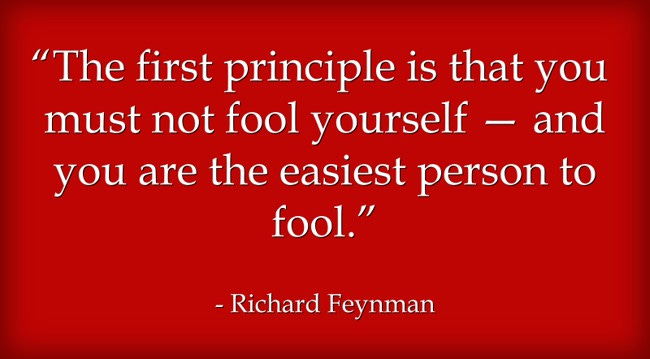
The same mind that becomes trapped inside religion can become trapped inside atheism. The same mind that becomes attached to politics can become attached to being anti-political. The same mind that seeks certainty in authority can seek certainty in rebellion. Human beings are extraordinarily skilled at fooling themselves while believing they are seeing clearly.
Most people imagine freedom means escaping conditioning. But genuine freedom requires something more difficult. It requires recognizing that you remain vulnerable to self-deception no matter how aware, intelligent, independent, or self-reflective you believe yourself to be.
The greatest trap is often believing you have finally escaped all traps.
The tragedy is that many people will live and die without ever meeting themselves underneath the conditioning. They will spend their lives performing versions of themselves designed to remain acceptable. Safe opinions, safe emotions, safe ambitions, and safe identities. Entire lives built around avoiding rejection and denial.
Freedom begins when a man becomes willing to disappoint the systems that manufactured him. Real strength begins when he can tolerate indecision without immediately reaching for another ideology, authority figure, tribe, or identity to calm himself down. The strongest men are not the ones who cling most tightly to assurance. They are the men capable of standing inside the unknown without surrendering their conscience, awareness, or integrity to feel psychologically safe.
Once you begin to see humanity through that lens, it changes the way you see people forever. Beneath much of the arrogance, control, aggression, and moral superiority is something far less impressive than wisdom and something far less sinister than evil. It is fear, shame, and pain. It is human beings desperately protecting the psychological structures they built to survive.
The challenge is remembering that we are not standing outside this process looking in. We are participants in it. The same mind that can see another person’s blind spots can create its own. Freedom begins not when we become certain we have escaped self-deception, but when we become humble enough to question ourselves as deeply as we question everyone else.