
Attention Is Life

Something feels off.
Most people can feel it even if they struggle to explain it. Life feels flatter, conversations feel thinner, and attention spans are collapsing. Time seems to move faster every year. Relationships feel emotionally distant even while people remain constantly connected. We have access to more entertainment, stimulation, information, convenience, and comfort than any generation in human history. Yet, many people quietly walk around feeling restless, anxious, disconnected, exhausted, and strangely numb to their own lives.
A lot of people think they are depressed when what they really are is overstimulated.
The average person now spends very little time alone with their own mind. The moment boredom appears, stimulation rushes in to fill the space. Notifications, social media, news, videos, podcasts, text messages, emails, opinions, and outrage. Most people wake up and begin consuming before they are fully conscious. Then the cycle continues throughout the day: more information, more distraction, and more noise.
Now there is almost none.
The brain adapts to whatever environment it repeatedly experiences. The more stimulation the mind consumes, the less sensitive it becomes to ordinary life. The nervous system begins expecting constant wonder, constant interruption, and constant intensity. Eventually, simple experiences stop landing with the same depth they once did. A conversation feels boring, a walk feels boring, and sitting quietly feels boring.
The deeper problem is that many people are no longer fully experiencing their own lives.
They exist in a state of continuous partial attention. Sitting with family while mentally somewhere else. Eating dinner while consuming information. Listening without really listening and looking without really seeing. The body remains in one place while attention lives somewhere else, and attention is life.
Whatever receives your attention receives your life.
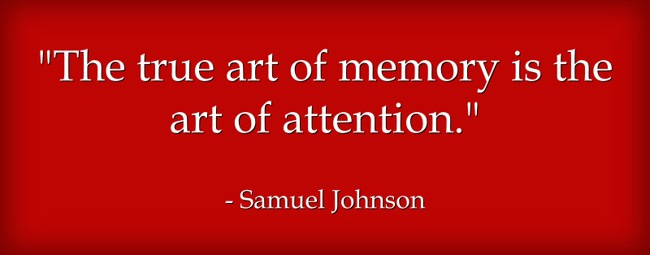
Every notification costs something, not money or productivity. It costs a moment of your life that you can never experience again. Most people assume they’ll remember the important parts of their lives, but memory follows attention. We remember what we notice. We remember what we are present for. The rest disappears quietly into the background.
I have noticed this in myself.
Not because I spend all day scrolling social media. Not because I am glued to a screen. But because I catch myself drifting. I’ll be sitting with my wife and suddenly realize my attention is somewhere else. Not on her, but somewhere in the future, somewhere in a problem, somewhere in a conversation that has not happened yet, and somewhere in a screen. I’m sitting next to the most beautiful woman I know, and somehow my attention is being captured by things that won’t matter nearly as much.
Attention is how love becomes visible. A child feels loved when you watch. A spouse feels loved when you listen. A friend feels loved when you stay present long enough to understand them. We say the people in our lives matter most, but our attention often tells a different story.
Lately I have been trying to pay more attention to the things right in front of me. My granddaughter laughing, carrying chickens around the backyard, and chasing marsh crabs, sitting by the water, watching the wind move through the trees, or floating around on a kayak.
Life happens in ordinary moments. It happens in conversations, relationships, laughter, curiosity, nature, and presence. The problem is that modern life trains us to constantly look beyond the moment we are in, searching for something more stimulating, and in the process, we miss our own lives.
This may also be one reason time feels like it accelerates as we get older. Attention creates memory, and memory creates the feeling of a life being lived. When attention becomes fragmented, memories become fragmented too. Days blur together, weeks disappear, months disappear, and years disappear. A person looks up one day and realizes they spent a decade constantly stimulated but rarely fully present.
Beneath all of this sits a truth that many people do not want to face.
The moment distractions disappear, things begin surfacing. Loneliness surfaces, grief surfaces, fear surfaces, and regret surfaces. The questions begin surfacing too. Am I happy? Am I becoming the man I want to become? Am I paying attention to the things that actually matter? Is this really how I want to spend my life?
The strange thing is that many people have adapted to this low-grade disconnection so completely that they assume it is simply what adulthood feels like. Many people have lost touch with the conditions that make life meaningful in the first place.
A healthy mind needs silence, it needs stillness, it needs reflection, and it needs room to wander. Especially boredom. The moment stimulation disappears, the mind becomes lost. The urge to check your phone appears. The urge to do something appears. But if you stay there long enough, something begins changing. Thoughts slow down, attention deepens, and awareness sharpens.
Life begins feeling textured again.
You notice the wind. You notice your child’s laugh. You notice the tension in your body. You notice the direction your life is heading. You notice the exhaustion you have been carrying.
Eventually, deeper questions begin to emerge beneath all the noise. What kind of man am I becoming? What am I constantly running from? Am I paying attention to the things that actually matter?
Most people never stay still long enough to reach those questions because the stimulation returns too quickly. But meaning rarely arrives through more information. Meaning arrives through attention.
The real danger is not that we spend too much time on our phones. The real danger is that we spend too little time with ourselves. We know what strangers think, what celebrities are doing, what politicians said, what is trending, and what everyone else is talking about.
The modern world has made information abundant and self-awareness scarce.
Not long ago my kids were small. Now they’re adults. Now a granddaughter is running around. Somehow there are chickens in the backyard and marsh crabs wandering into my office. I’ve started paying attention to those things because I’ve noticed that the moments that end up mattering most rarely announce themselves when they’re happening.
One day your child will stop asking you to watch. One day your dog won’t greet you at the door. One day there will be a last conversation with someone you love, and you won’t know it’s the last one while it’s happening.
You don’t know you’re in the middle of a memory. You don’t know it’s one of the last summers your child wants to spend every weekend with you. You don’t know which conversations will become the ones you wish you could have again.
I’ve never stood at a funeral wishing I’d spent more time checking email. I’ve never heard someone describe their greatest memories and mention a notification from Instagram. What people remember are conversations, laughter, campfires, road trips, ordinary afternoons, and the people they shared them with.
Life doesn’t tell you when something matters. It just keeps moving, and that’s why attention matters. Not because being present is a productivity hack or mindfulness technique, but because attention is how we experience our lives while they’re actually happening.
A peaceful moment with my wife, an uncontrollable laugh from an inappropriate joke, a well-prepared family meal, a walk along the beach, a difficult conversation with a friend, or a granddaughter wanting you to watch something for the hundredth time. Most of life is made up of moments like these.
The problem is that we’re so busy looking for something more interesting that we miss them while they’re here, and then one day they’re gone. Not dramatically, just quietly, replaced by the next season of life.
The real challenge is learning how to pay attention to the life that’s right in front of us before it becomes a memory. It’s a gift we’ve all received, and we should not waste it on things that don’t matter. This is something I’ve known for years and constantly work on. It is a slow process; sometimes I get lost, but it’s definitely worth my time and attention.
If attention is life, where is your life actually going?